.png)
Professional weed control can help homeowners maintain a thicker, healthier lawn without having to identify weeds, select products, or apply treatments themselves. For families with children and pets, however, it's natural to have questions about how lawn treatments should be handled.
The key is understanding what is being applied, how it is being used, and when children and pets can safely return to the lawn. A professional lawn care company can make weed control safe by identifying specific weeds and applying treatments only when they are appropriate.
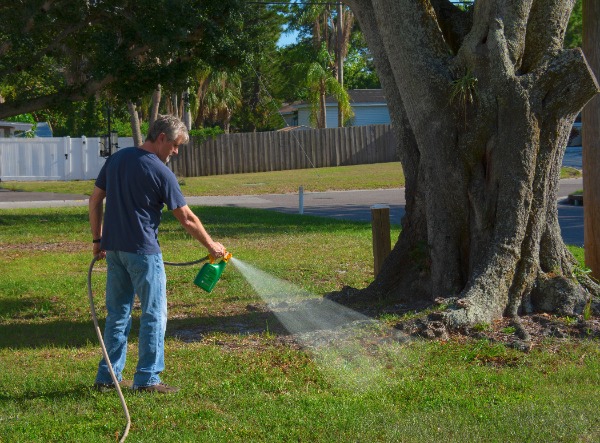
One of the biggest advantages of professional weed control is that homeowners don't have to determine which product to use or calculate the application rate themselves.
Professional technicians are trained to identify common lawn weeds and select treatments designed for the specific problem. They can also account for factors such as turfgrass type, weather conditions, application timing, and the location of nearby landscaping.
Professional weed control can provide:
Professional lawn treatments are designed to be applied according to specific product instructions. After an application, children should stay away from treated areas for the amount of time specified by the product label and the lawn care provider.
A professional technician should also be able to explain what was applied and what precautions are necessary afterward. For households with children, professional weed control can be especially convenient because homeowners don't have to handle or store lawn herbicides themselves.
Good precautions include:

Pets can be more difficult to keep away from treated areas because they naturally explore the yard and may walk through grass, investigate plants, or lick their paws.
For this reason, professional lawn care companies should provide clear instructions about when pets can return to the lawn after treatment. Pet owners should follow those directions carefully and keep animals away from treated areas during the required re-entry period.
Additional precautions include:
There isn't one standard waiting period for every professional weed control application. The required re-entry time depends on the product used, application method, weather conditions, and product label.
Some treatments may require people and pets to remain off the lawn until the application has dried, while other products can have different requirements. Your lawn care provider should tell you when it is appropriate to return to the treated area. When scheduling professional weed control, ask:
What product was applied? Knowing the product or active ingredient can provide useful information about the treatment.
When can my family use the lawn again? Your provider should be able to explain the appropriate re-entry instructions.
Does the treatment require watering? Some products have specific watering requirements, while others should be left undisturbed for a particular period.
Are there areas that should not be treated? Let the technician know about vegetable gardens, children's play areas, pet runs, or other sensitive locations.
Professional lawn care companies can often identify individual weed problems instead of relying on the same treatment for every situation.
This targeted approach can be useful when only certain areas of a property have weed problems. Rather than applying treatments without evaluating the lawn, technicians can determine which weeds are present and select an appropriate control strategy.
Targeted applications can help:
Pre-emergent treatments are designed to prevent certain weeds from becoming established before they emerge from the soil. Timing is especially important because these treatments need to be applied before targeted weeds germinate.
A professional lawn care company can schedule applications around local growing conditions and the types of weeds commonly found in the area.
Post-emergent treatments are used after weeds have already appeared. Technicians can identify the weeds present and choose products intended for those specific plants. This can be especially helpful for broadleaf weeds such as dandelions, clover, chickweed, and plantain.
Using the appropriate treatment at the appropriate growth stage can improve control while reducing unnecessary applications.
Professional weed control is most effective when it is part of a larger lawn maintenance program.
A thick, healthy lawn naturally makes it more difficult for weeds to establish. Dense turf competes for sunlight, water, nutrients, and growing space, leaving fewer openings where weed seeds can develop.
Professional lawn care programs may combine weed control with:
Q: Is professional weed control safe for children?
A: Professional weed control can be applied responsibly when trained technicians follow product labels and application requirements. Children should remain away from treated areas according to the specific re-entry instructions provided by the lawn care company.
Q: Is professional weed control safe for dogs and cats?
A: Professional treatments can be used responsibly around pets when application and re-entry instructions are followed. Pets should stay off treated areas for the period specified by the product label or technician.
Q: How long should pets stay off professionally treated grass?
A: The required waiting period varies depending on the product and application. Your lawn care provider should give you specific re-entry instructions after the treatment.
Q: Are professional weed control treatments better than DIY products?
A: Professional services provide trained weed identification, appropriate product selection, accurate application rates, and consistent scheduling. They also eliminate the need for homeowners to handle and apply lawn herbicides themselves.
Q: Can professional weed control prevent weeds from coming back?
A: Professional treatments can significantly reduce weed pressure, but no treatment prevents every weed from returning indefinitely. Maintaining thick, healthy turf and using properly timed preventive treatments can provide better long-term control.
Q: Should I tell my lawn care company that I have pets or children?
A: Absolutely. Let your provider know about children, pets, play areas, and other concerns before treatment. This gives the technician an opportunity to explain the application and the appropriate precautions for your property.
Let Essential Landscapes transform your property today with the best lawn care and landscaping services in North Reading, MA!