.png)
Lawn aeration works best when Massachusetts grass is actively growing and able to recover quickly. For most cool-season lawns, that means early fall, when temperatures are moderate and soil conditions are favorable.
Aerating at the right time can relieve compaction, improve root growth, and prepare the lawn for overseeding. Spring can also be an option, while mid-summer is generally best avoided because of heat and drought stress. The ideal timing ultimately depends on your grass type, soil moisture, lawn condition, and local weather.
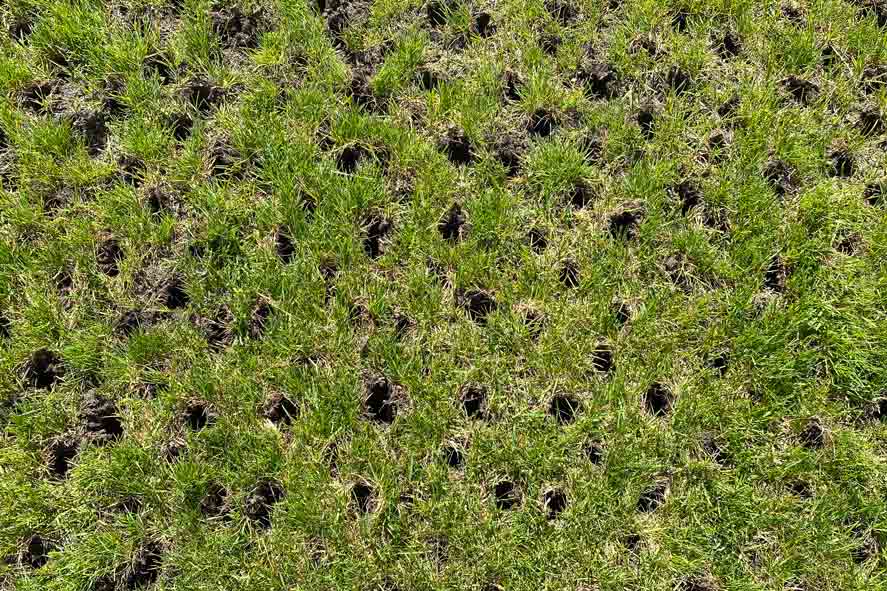
Soil naturally becomes compressed over time. Children playing outside, pets running across the yard, mowing equipment, outdoor activities, and repeated foot traffic can all contribute to compaction.
Compacted soil leaves less room for roots to expand and can interfere with the movement of water and nutrients. Core aeration removes small plugs of soil from the lawn, creating pathways through the compacted layer.
A properly timed aeration treatment can help:
For many Massachusetts lawns, early fall is the strongest time of year for core aeration. Cooler air temperatures reduce stress on the grass while the soil can remain warm enough to support continued root activity. This creates favorable conditions for the lawn to recover after aeration.
Fall is also an especially useful time to combine several lawn care practices. UMass recommends fall cultivation when it can be paired with overseeding, fertilization, and liming programs.
For homeowners planning a larger lawn renovation, early fall can therefore accomplish several goals at once:
Spring aeration isn't automatically a bad idea. Early spring and fall are both recognized as periods of active turf growth when cultivation can be beneficial.
However, spring aeration has some drawbacks for Massachusetts homeowners. Opening the soil during the spring growing season can create opportunities for annual grassy weeds, and UMass specifically recommends delaying core aeration until late summer or early fall when crabgrass is a concern.
Spring may make sense when:
Choosing the right month isn't enough. Soil conditions on the day of aeration matter, too.
Extremely dry soil can make it difficult for a core aerator to penetrate deeply enough to remove effective soil plugs. On the other hand, overly wet soil can cause equipment to struggle and may create additional compaction.
The ideal condition is generally soil that is slightly moist but not saturated. UMass specifically recommends aerating when the soil has adequate moisture and avoiding conditions where the ground is either excessively dry or wet.
This is one reason why a specific calendar date isn't always the best way to schedule aeration. Weather and soil conditions should be considered along with the time of year.
In many Massachusetts lawns, aeration and overseeding work particularly well together.
Core aeration removes plugs of soil and creates openings where grass seed can make direct contact with the soil. This can provide better conditions for germination than scattering seed across a dense layer of existing turf.
The timing is especially useful in late summer and early fall, which UMass identifies as the preferred period for establishing cool-season grasses in Massachusetts.
If your lawn has thin areas, bare patches, or declining turf density, combining aeration with overseeding can address both the soil and grass problems at the same time.
There isn't one universal schedule for every property.
A lightly used lawn with good soil structure may only need aeration every year or two. Heavily trafficked areas can require more frequent attention because repeated activity causes compaction to develop faster.
UMass notes that most lower-traffic lawn areas generally benefit from core cultivation every year or two depending on site conditions, while heavily trafficked locations may need considerably more frequent aeration.
The condition of the lawn is therefore more useful than simply following a fixed calendar.
You may want to consider aeration when you notice:
Q: What is the best month to aerate a lawn in Massachusetts?
A: September is often an excellent month because cool-season grasses are actively growing while temperatures become more favorable for recovery. The exact timing depends on local weather and soil conditions.
Q: Is spring or fall better for lawn aeration in Massachusetts?
A: Both seasons can work, but fall is often preferred because it pairs well with overseeding and other lawn renovation practices. Spring aeration can also be useful when conditions call for it.
Q: Can I aerate my lawn in the summer?
A: It's generally best to avoid mid-summer aeration, particularly during periods of high heat or drought. Turf may have difficulty recovering from the disturbance under stressful conditions.
Q: Should I aerate before overseeding?
A: Yes. Core aeration can create openings that improve seed-to-soil contact, making it a useful step before overseeding. Fall is particularly well suited for combining these practices in Massachusetts.
Q: How often should I aerate my Massachusetts lawn?
A: Many lawns benefit from aeration every year or two, while heavily trafficked properties may require it more frequently. Soil type, traffic, compaction, and overall lawn condition should determine the schedule.
Q: How wet should the soil be before aerating?
A: The soil should generally be slightly moist rather than extremely dry or saturated. Proper moisture helps the aerator penetrate the ground and remove soil cores effectively.
Let Essential Landscapes transform your property today with the best lawn care and landscaping services in North Reading, MA!